
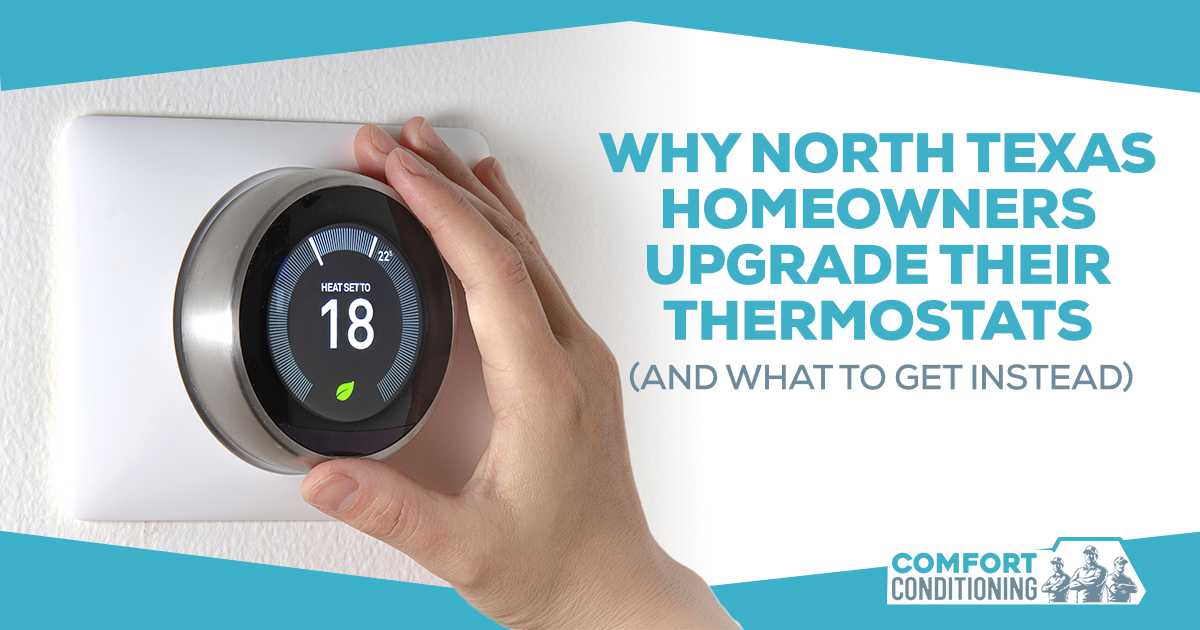
A thermostat plays an important role in how a home’s heating and cooling system operates, yet many homeowners continue using basic or outdated controls long after their comfort needs have changed. An older thermostat may still turn the HVAC system on and off, but newer options can provide more control over temperature settings, schedules, and daily comfort. For North Texas homeowners dealing with demanding summer cooling conditions, upgrading the thermostat can be a practical way to gain better control without automatically replacing an otherwise suitable HVAC system.
Why an Outdated Thermostat May Be Ready for an Upgrade
An outdated thermostat is not necessarily defective, but it may no longer provide the level of control a household needs. Homeowners often begin considering a thermostat replacement when temperature management becomes inconvenient, scheduling is limited, or the existing controls do not work well with newer preferences and technology. Recognizing these limitations can help determine whether upgrading the thermostat makes sense.
Limited Temperature Control
Older thermostats may offer little more than basic temperature adjustments, requiring homeowners to make frequent manual changes throughout the day. This can become inconvenient when household schedules vary or when different temperature settings are preferred during working hours, sleeping hours, and periods away from home. A newer thermostat can provide additional control that makes it easier to manage indoor temperatures according to those changing needs.
Inaccurate or Inconsistent Temperature Readings
An aging or poorly functioning thermostat may contribute to inconsistent temperature control if it does not accurately reflect conditions inside the home. Homeowners may notice that the HVAC system runs when the space already feels comfortable or that certain temperature settings do not produce the expected results. While temperature fluctuations can have several causes, an outdated thermostat can be one factor worth evaluating before assuming the entire HVAC system needs attention.
No Scheduling or Modern Control Features
Basic thermostats may lack programmable schedules, remote access, usage information, or other controls that are available on newer models. Homeowners who frequently adjust the thermostat manually may find that scheduling features make everyday temperature management considerably easier. An upgrade can therefore provide greater convenience even when the existing HVAC equipment itself remains appropriate for the home.
How a Thermostat Upgrade Can Improve Comfort in North Texas
North Texas homes can experience substantial cooling demands during periods of extreme summer heat, making consistent temperature control particularly important. A thermostat does not create cooling capacity on its own, but it determines when the HVAC system is instructed to operate based on the settings selected by the homeowner. Better controls can make it easier to establish appropriate temperatures and schedules while avoiding unnecessary adjustments.
More Consistent Indoor Temperatures
A modern thermostat can give homeowners more precise control over preferred indoor temperatures and when those settings should apply. Programmable schedules can automatically change the temperature at different times of day, reducing the need for constant manual adjustments. This can be especially useful for households with predictable routines, changing work schedules, or regular periods when the home is unoccupied.
Better Control During Peak Summer Heat
During the hottest periods of a North Texas summer, homeowners may rely heavily on their air conditioning systems to maintain comfortable indoor conditions. Having a thermostat that makes temperature settings and schedules easier to manage can help homeowners respond appropriately to those demanding conditions. The goal is not to make the HVAC system perform beyond its capabilities, but to give the household better control over how the system is used.
Less Unnecessary HVAC Operation
Appropriate temperature settings and schedules can help prevent cooling from occurring when it is not needed. For example, a homeowner may choose different settings while the household is away and return to a preferred comfort level before occupants come home. This type of control may help reduce unnecessary HVAC operation, although actual energy use depends on the home’s equipment, insulation, weather conditions, settings, and other factors.
Smart Thermostat vs. Programmable Thermostat: What Is the Difference?
For homeowners considering a thermostat upgrade, programmable and smart thermostats are two common options. Both can provide more control than a basic thermostat, but they offer different levels of convenience and connectivity. The better choice depends on the HVAC system, household routines, desired features, and how much control the homeowner actually needs.
What a Programmable Thermostat Offers
A programmable thermostat allows homeowners to establish temperature changes according to a schedule. Instead of manually changing the thermostat every time the household leaves, returns, goes to sleep, or wakes up, the thermostat can follow predetermined settings.
Common programmable features include:
- Scheduled temperature changes
- Different settings for different times of day
- Reduced need for constant manual adjustments
- Basic automated temperature management
For households with consistent daily routines, these features may provide the control needed without adding unnecessary technology. A programmable thermostat can therefore be a practical upgrade for homeowners who want better scheduling without relying on connected devices or smartphone controls.
What a Smart Thermostat Adds
A smart thermostat generally provides more connected features in addition to temperature scheduling. Depending on the model, homeowners may be able to adjust settings through an app, connect the thermostat with compatible smart-home systems, and access additional monitoring or control features.
Smart thermostat features may include:
- App-based or remote temperature control
- More advanced scheduling
- Compatibility with certain smart-home systems
- Additional monitoring or control capabilities
- Potentially more adaptive temperature management
Smart does not automatically mean better for every household. A thermostat should provide features that are useful to the people living in the home while remaining compatible with the existing HVAC equipment.
Can a New Thermostat Reduce HVAC Strain During North Texas Summers?
A thermostat upgrade can influence how an HVAC system operates, particularly when scheduling and temperature controls are used appropriately. By helping homeowners avoid unnecessary cooling during periods when the home is unoccupied, better controls may reduce some unnecessary run time. However, installing a new thermostat does not automatically improve HVAC performance or guarantee lower energy use.
How Better Scheduling Can Reduce Unnecessary Run Time
Scheduled temperature adjustments can help align HVAC operation with the household’s actual routine. A homeowner may use a higher cooling setting while away from home and establish a preferred setting for the hours when occupants are present. This approach can provide more deliberate control over when the air conditioning system is expected to cool the home.
Why Thermostat Compatibility Matters
A thermostat must be compatible with the home’s existing heating and cooling equipment for its controls to function as intended. Different HVAC systems can have different wiring, control, and equipment requirements, so choosing a thermostat based only on its features may not be enough. Compatibility should be considered before purchasing an upgrade, particularly when the thermostat will be connected to existing HVAC controls.
When a Thermostat Upgrade Makes More Sense Than a Full HVAC Replacement
An outdated thermostat does not automatically mean that the entire HVAC system needs to be replaced. If the existing equipment remains suitable for the home and the primary concern is temperature control, scheduling, or outdated controls, a thermostat upgrade may be a more focused improvement. The condition and performance of the HVAC equipment should still be evaluated separately when replacement concerns exist.
What to Look for When Choosing a Thermostat Upgrade
Choosing a thermostat should begin with the home’s needs rather than with the assumption that the newest model is automatically the best option. Homeowners can consider how the household uses the HVAC system, which features would actually be useful, and whether the thermostat is compatible with the existing equipment. A practical decision can provide better control without adding unnecessary complexity.
HVAC System Compatibility
Compatibility should be one of the first considerations when selecting a replacement thermostat. The thermostat needs to work appropriately with the home’s heating and cooling equipment and its existing control configuration. When compatibility is uncertain, professional evaluation can help determine which thermostat options are suitable.
Scheduling Features
Homeowners should consider whether basic programmable scheduling is sufficient or whether more advanced controls would provide meaningful benefits. A household with a predictable routine may only need scheduled temperature changes at certain times of day. A household with less predictable schedules may benefit from more flexible controls.
Remote and Smart-Home Controls
Remote access can be useful for homeowners who want to adjust temperature settings while away from home. Smart-home connectivity may also be beneficial when a household already uses compatible connected devices. These features should be viewed as conveniences rather than requirements for every thermostat upgrade.
Ease of Use
A thermostat should be straightforward for everyone in the household to operate. A model with numerous features may not be the best fit if those features make everyday adjustments unnecessarily complicated. The right thermostat balances useful capabilities with controls that household members can comfortably understand and use.
Professional Thermostat Installation
Professional installation can be an important consideration when thermostat compatibility, wiring, configuration, or HVAC controls are involved. Proper installation helps ensure that the selected thermostat is connected and configured appropriately for the existing system. It also gives homeowners an opportunity to address compatibility questions before an unsuitable thermostat is installed.
When Is the Right Time to Upgrade a Thermostat?
There is no single thermostat age that automatically means replacement is necessary. Instead, homeowners can consider whether the existing thermostat continues to provide the control, convenience, and functionality the household expects. An upgrade may be worth considering when the limitations of the current thermostat have become noticeable in everyday use.
Common situations that may prompt an upgrade include:
- The thermostat is outdated or difficult to operate.
- Temperature settings are frequently adjusted manually.
- The thermostat lacks useful scheduling capabilities.
- Homeowners want remote temperature control.
- The existing thermostat does not provide the desired level of comfort control.
- The homeowner is updating HVAC controls while keeping an otherwise suitable HVAC system.
These circumstances do not mean that every homeowner needs a smart thermostat or an immediate replacement. They simply indicate that the existing thermostat may no longer be the best fit for the household’s needs.
A Thermostat Upgrade Can Be a Practical HVAC Improvement
Upgrading a thermostat is ultimately about gaining better control rather than simply purchasing the newest device available. The right thermostat can provide more convenient scheduling, improved temperature management, and greater control over HVAC operation, which can be especially useful when North Texas homeowners are managing heavy summer cooling demands. Selecting the right option requires consideration of the home’s HVAC equipment, household routines, desired features, and overall comfort goals.
Homeowners who determine that a thermostat upgrade is appropriate can benefit from having the existing system and thermostat requirements evaluated before installation. Professional thermostat installation can help ensure that the selected control is appropriate for the HVAC system and configured for reliable everyday operation. For homeowners ready to explore their options, Comfort Conditioning can help with the next step toward a properly installed thermostat upgrade.
Schedule Thermostat Installation With Comfort Conditioning
Homeowners considering a thermostat upgrade can contact Comfort Conditioning to discuss their options and schedule professional thermostat installation. A properly selected and installed thermostat can provide the additional control needed to manage temperature settings and schedules more conveniently. The focus should be on choosing a thermostat that fits the home’s HVAC system and the household’s actual comfort needs.