
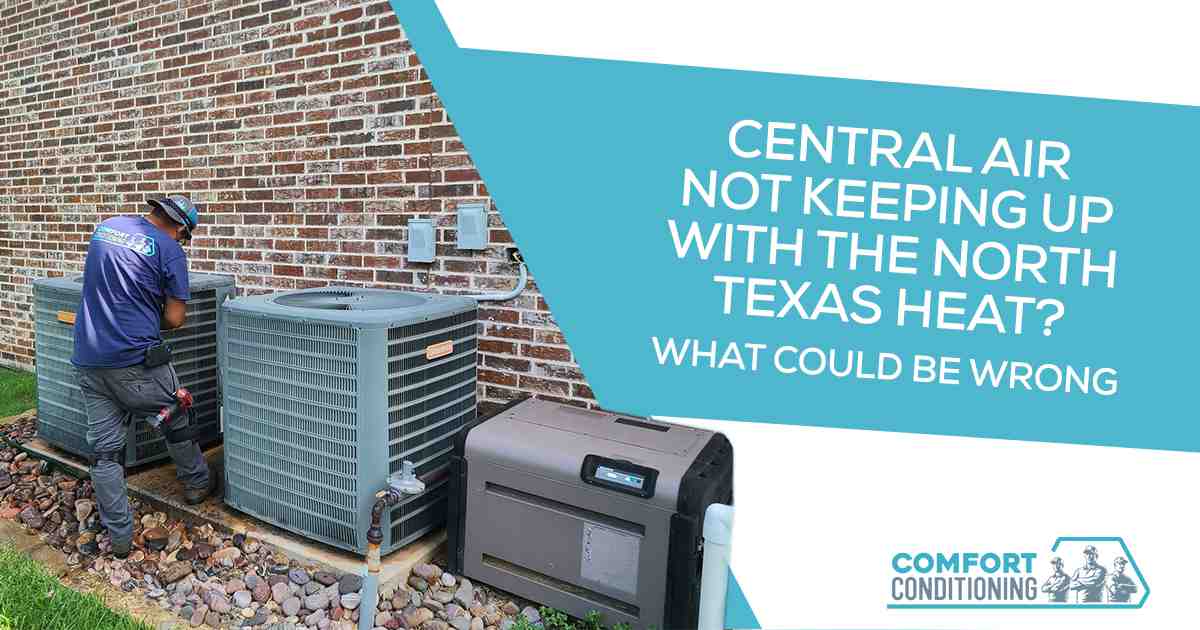
When summer temperatures climb across North Texas, homeowners depend on their central air conditioning systems to keep indoor spaces comfortable. Although an air conditioner may run longer during extreme heat, it should still be able to maintain a reasonably comfortable indoor temperature under normal operating conditions. If the system continuously struggles to cool the home, it often signals an underlying issue that should be addressed before it leads to more extensive repairs.
Understanding why a central air system is not cooling properly helps homeowners recognize when simple maintenance may solve the problem and when professional service is necessary. Prompt diagnosis not only restores comfort but can also improve energy efficiency and reduce unnecessary wear on expensive HVAC components.
Why Is Central Air Not Cooling During the North Texas Heat?
North Texas summers place significant demands on residential cooling systems, especially during extended periods of triple-digit temperatures. As outdoor temperatures rise, central air conditioners naturally operate longer because they must remove more heat from the home throughout the day. Longer cooling cycles alone do not necessarily indicate a problem.
However, there is an important difference between an air conditioner working harder and one that is no longer cooling effectively. If indoor temperatures continue climbing despite the system running continuously, or if rooms never seem to reach the thermostat setting, there is likely an issue affecting cooling performance.
Reduced cooling should never be ignored because seemingly minor issues often become more serious over time. Components forced to operate under excessive strain experience additional wear, potentially leading to larger repairs and higher utility bills if the underlying cause is left unresolved.
How Extreme Heat Affects Cooling Performance
Even a properly functioning central air conditioner has design limitations during exceptionally hot weather. On extremely hot afternoons, homeowners may notice the system runs for extended periods before reaching the desired indoor temperature, especially if the home receives significant afternoon sun or has inadequate insulation.
While longer run times can be expected, the system should still produce consistently cool air and maintain reasonable comfort throughout the home. If airflow weakens, warm air blows from the vents, or humidity begins increasing indoors, professional inspection is recommended to determine whether a mechanical issue is preventing efficient operation.
Common Reasons a Central Air System Is Not Cooling Properly
Several mechanical, electrical, and airflow-related problems can reduce a central air conditioner’s ability to cool efficiently. Identifying the actual cause is important because different issues require different repair solutions.
Because a central air conditioning system relies on multiple components working together, a problem in just one area can reduce overall cooling performance. Airflow restrictions, refrigerant issues, electrical malfunctions, or mechanical wear may produce similar symptoms, making professional diagnosis valuable for identifying the actual source of the problem. Understanding these common causes helps homeowners recognize when routine maintenance may be enough and when repairs are likely needed.
Dirty Air Filters Restrict Airflow
One of the most common reasons a central air system struggles during summer is a clogged air filter. As dust, pet hair, pollen, and other debris accumulate, airflow becomes increasingly restricted, making it difficult for conditioned air to circulate throughout the home.
Reduced airflow forces the blower motor to work harder while limiting the amount of cool air reaching each room. In some situations, severely restricted airflow can even contribute to frozen evaporator coils, further reducing cooling capacity and increasing strain on the HVAC system.
Fortunately, replacing a dirty air filter is one maintenance task many homeowners can safely perform themselves. Following the manufacturer’s recommended replacement schedule helps improve airflow, supports cooling efficiency, and protects major HVAC components from unnecessary stress.
Low Refrigerant Levels Reduce Cooling Capacity
Central air systems depend on the proper amount of refrigerant to absorb indoor heat and release it outside. Refrigerant is not consumed during normal operation, so low refrigerant levels usually indicate a leak somewhere within the sealed system.
As refrigerant levels decrease, homeowners may notice longer cooling cycles, higher indoor temperatures, ice forming on refrigerant lines, or reduced airflow caused by frozen evaporator coils. Simply adding refrigerant does not solve the underlying problem because the leak will continue allowing refrigerant to escape.
Professional technicians locate the source of the leak, complete the necessary repairs, and recharge the system to manufacturer specifications. Proper refrigerant handling requires specialized equipment and should always be performed by qualified HVAC professionals.
Dirty Outdoor Condenser Coils Affect Heat Transfer
The outdoor condenser unit releases heat collected from inside the home. When dirt, grass clippings, leaves, cottonwood, and other debris accumulate on the condenser coils, the system cannot transfer heat efficiently into the outside air.
Poor heat transfer causes the air conditioner to work harder while producing less cooling inside the home. Energy consumption increases, cooling cycles become longer, and important components such as the compressor may experience additional strain.
Routine cleaning of the outdoor unit helps maintain proper airflow around the condenser. Professional maintenance also includes inspecting coil condition, removing stubborn debris, and verifying that the entire cooling system is operating efficiently.
Annual HVAC maintenance helps identify dirty condenser coils before they significantly affect cooling performance. During a seasonal inspection, technicians can also evaluate airflow, inspect electrical components, and verify overall system operation, helping homeowners avoid unexpected breakdowns during the hottest months of the North Texas summer.
Failing Capacitors or Electrical Components
Several electrical components play essential roles in starting and operating a central air conditioning system. Capacitors provide the electrical boost needed to start motors, while contactors and relays help regulate system operation.
As these components wear over time, homeowners may notice intermittent cooling, delayed startup, unusual humming noises, or the outdoor unit failing to operate consistently. Because electrical issues can affect multiple HVAC components, proper diagnosis is necessary to identify the exact source of the problem.
Replacing a failing capacitor or electrical component early often prevents additional damage to larger, more expensive parts. Prompt repairs also reduce the likelihood of complete system failure during the hottest days of summer.
Thermostat Problems Can Cause Incorrect Cooling
Sometimes the air conditioner itself is not the primary problem. Incorrect thermostat settings, dead batteries, calibration issues, faulty sensors, or programming errors may prevent the system from operating as intended.
A malfunctioning thermostat may cycle the system too frequently, fail to call for cooling, or inaccurately measure indoor temperature. These issues can leave homeowners believing the air conditioner has failed when the actual problem lies with the control system.
Professional HVAC technicians evaluate both the thermostat and the equipment it controls to ensure all components communicate correctly. Proper calibration helps maintain consistent indoor comfort while improving overall system efficiency.
Leaky Ductwork Sends Cool Air Into the Attic
Conditioned air travels throughout the home using a network of supply ducts. If those ducts develop leaks, disconnected sections, or damaged seals, cooled air may escape into the attic or crawlspace before ever reaching occupied rooms.
Air loss reduces system efficiency while creating uneven temperatures throughout the house. Some rooms may remain comfortable while others become noticeably warmer, causing the air conditioner to operate longer than necessary.
Professional duct inspections help identify hidden leaks that may otherwise go unnoticed for years. Sealing damaged ductwork improves airflow, enhances cooling performance, and may help reduce monthly utility costs.
Compressor Problems Reduce Cooling Performance
The compressor serves as the heart of the central air conditioning system by circulating refrigerant between the indoor and outdoor components. If the compressor begins failing, the entire cooling process becomes less effective.
Symptoms of compressor problems may include warm air from the vents, loud mechanical noises, hard starting, frequent breaker trips, or the inability to maintain indoor temperatures. Because compressor replacement represents one of the more significant HVAC repairs, accurate diagnosis is essential before any work begins.
HVAC professionals perform system testing to determine whether compressor repair is possible or if replacement should be considered. Proper diagnosis helps homeowners make informed decisions based on the condition of the entire system.
Signs Central Air Repair Should Not Be Delayed
Many cooling problems begin gradually before becoming major breakdowns. Recognizing early warning signs allows homeowners to schedule repairs before additional HVAC components experience unnecessary strain.
Common warning signs include:
- Warm air blowing from supply vents
- Constant system operation without reaching the thermostat setting
- High indoor humidity
- Uneven temperatures between rooms
- Ice forming on refrigerant lines or coils
- Short cycling
- Rising energy bills
- Unusual noises
- Burning or electrical odors
While one warning sign may not always indicate a major repair, multiple symptoms occurring together often suggest an underlying system problem. For example, warm air from the vents combined with rising humidity or unusually high energy bills may point to reduced cooling efficiency that should be professionally evaluated before additional components become affected.
Delaying repairs often increases the severity of the original problem. What begins as a minor airflow restriction or electrical issue may eventually contribute to compressor damage or complete system failure, resulting in more expensive repairs and extended periods without reliable cooling.
How HVAC Professionals Determine the Right Solution
Not every cooling issue requires the same repair approach. Professional HVAC technicians evaluate the age of the equipment, maintenance history, operating condition, repair costs, and overall efficiency before recommending the most appropriate solution.
Many cooling problems involve relatively minor repairs such as replacing electrical components, repairing refrigerant leaks, sealing ductwork, cleaning condenser coils, or correcting thermostat issues. When the equipment is otherwise in good condition, these repairs often restore reliable cooling without requiring major system replacement.
In some situations, technicians may determine that replacement offers better long-term value. Older systems experiencing repeated breakdowns, severe compressor failure, obsolete refrigerants, or repair costs approaching replacement value may benefit from upgrading to newer, more energy-efficient equipment.
A professional inspection provides homeowners with accurate information rather than assumptions. Understanding the condition of the entire HVAC system helps ensure repair decisions support both immediate comfort and long-term performance.
Professional Central Air Repair Helps Restore Comfort Faster
Professional diagnosis goes beyond simply identifying a symptom. HVAC technicians use specialized testing equipment to evaluate refrigerant pressures, airflow, electrical performance, thermostat operation, compressor function, and overall system efficiency before recommending repairs.
Accurate diagnosis reduces unnecessary repairs while helping ensure the actual cause of poor cooling is addressed. Timely service also minimizes additional stress on HVAC components, improves cooling efficiency, and may help prevent larger repairs during periods of extreme North Texas heat.
Homeowners also benefit from preventative recommendations that support reliable system performance throughout the cooling season. Routine inspections, scheduled maintenance, and prompt repairs help extend equipment life while maintaining consistent indoor comfort.
Professional evaluations also help rule out multiple issues that may occur at the same time. For instance, a system experiencing restricted airflow and low refrigerant may display similar symptoms to one with compressor problems, making comprehensive testing essential for recommending the most effective repair strategy.
For homeowners experiencing reduced cooling performance, scheduling professional central air repair after early warning signs appear can help restore system efficiency before small problems become much larger repairs.
Schedule Professional Central Air Repair Before Small Cooling Problems Become Bigger Repairs
A central air conditioner that struggles to keep up with the North Texas heat often indicates more than just unusually warm weather. Whether the issue involves restricted airflow, low refrigerant, electrical components, ductwork, or compressor performance, identifying the root cause early helps prevent additional damage and unnecessary expense.
Comfort Conditioning provides professional diagnostics and experienced central air repair to help homeowners restore reliable cooling as quickly as possible. Scheduling service when warning signs first appear can improve efficiency, protect valuable HVAC equipment, and keep homes comfortable throughout even the hottest North Texas summers. Early diagnosis often prevents minor cooling problems from developing into larger, more expensive repairs while helping restore dependable indoor comfort as quickly as possible.