
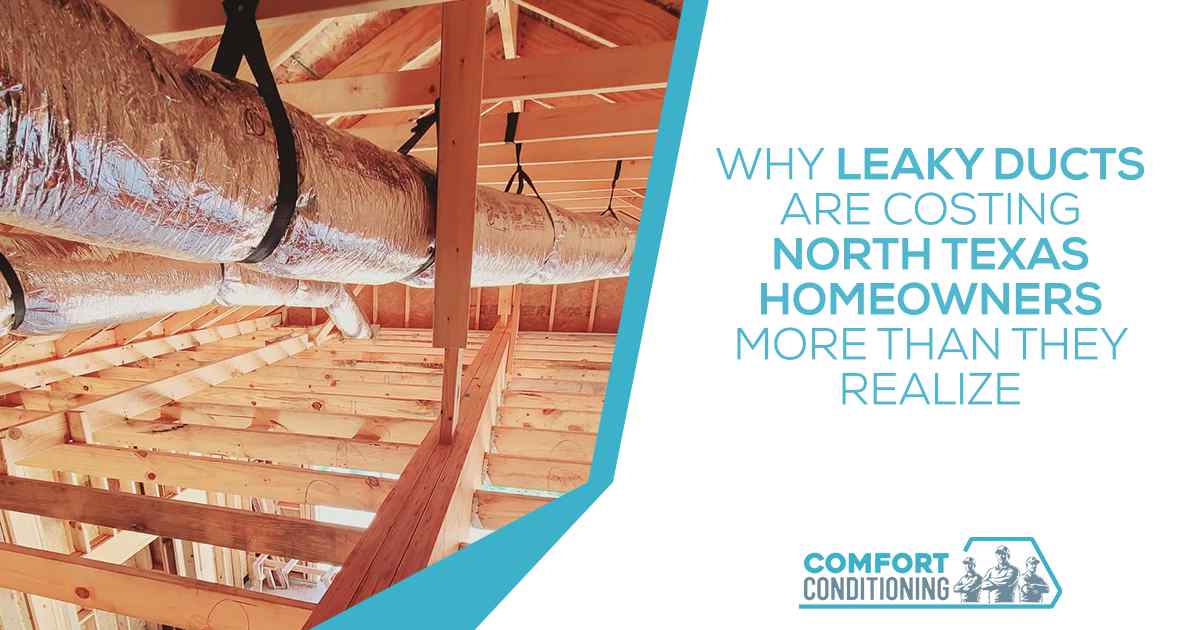
Many North Texas homeowners focus on their air conditioner when utility bills rise or certain rooms never seem to cool properly. However, the problem may not be the HVAC equipment itself but the ductwork that carries conditioned air throughout the home. Leaky ducts can quietly waste energy, reduce comfort, and force an HVAC system to work much harder than necessary.
Because ductwork is hidden behind walls, in attics, or within crawl spaces, leaks often go unnoticed for years. Homeowners may assume higher energy bills are simply part of surviving another hot North Texas summer without realizing conditioned air is escaping before it ever reaches the living space. Understanding how duct leakage affects HVAC performance can help homeowners recognize when professional duct sealing may be the right solution.
North Texas homes often rely heavily on air conditioning for much of the year, making efficient airflow especially important during extended periods of summer heat. Even small duct leaks can have a greater impact when HVAC systems are running daily to maintain comfortable indoor temperatures. Identifying and addressing hidden airflow problems can help homeowners better manage seasonal cooling costs.
How Leaky Ducts Increase Energy Costs in North Texas Homes
Leaky ducts occur when gaps, loose connections, aging sealant, or small openings allow conditioned air to escape before it reaches supply vents. Instead of delivering cooled air efficiently throughout the home, portions of that air leak into unconditioned spaces such as attics or crawl spaces. As a result, the HVAC system must operate longer to maintain the desired indoor temperature.
North Texas summers place significant demands on cooling systems due to prolonged periods of extreme heat. When conditioned air escapes through leaking ductwork, the air conditioner works harder to compensate for the lost airflow and cooling capacity. Longer operating cycles naturally increase electricity usage and contribute to higher monthly utility bills.
Many homeowners do not suspect their ductwork because the system continues to produce cool air. The gradual nature of duct leakage often masks the problem, making homeowners believe rising cooling costs are simply caused by aging equipment or hotter weather. In reality, even relatively small leaks throughout the duct system can reduce overall HVAC efficiency.
In many homes, leaking ductwork allows conditioned air to escape into unconditioned spaces such as attics rather than the rooms it is intended to cool. This wasted airflow means the HVAC system must replace lost air before the thermostat reaches the desired temperature, increasing energy consumption during North Texas’ long cooling season. Even when the air conditioner is operating properly, hidden duct leaks can quietly reduce overall system efficiency and increase monthly utility costs.
Common Signs of Leaky Air Ducts
While ductwork is hidden from view, the symptoms of leaking air ducts often appear throughout the home. Recognizing these warning signs can help homeowners determine whether a professional duct inspection is worthwhile. Although these symptoms may have multiple causes, leaking ductwork is one possibility that should not be overlooked.
Uneven Cooling Throughout the Home
One of the most common indicators of duct leaks is uneven cooling between rooms. Some areas may feel comfortable while others remain noticeably warmer, even when the thermostat is set correctly. Second-story bedrooms, bonus rooms, or spaces farthest from the HVAC system often experience the greatest temperature differences.
Homeowners may also notice weak airflow coming from certain supply vents. Instead of receiving the full volume of conditioned air produced by the system, those rooms receive less airflow because some air escapes before reaching its destination. This imbalance can make maintaining consistent comfort difficult during peak summer temperatures.
Higher Utility Bills Without Increased Usage
An unexpected increase in electricity costs can sometimes point to hidden duct leakage. If household cooling habits have not changed but monthly utility bills continue climbing, conditioned air loss may be contributing to reduced system efficiency. The HVAC system compensates by running longer and consuming more energy.
Longer cooling cycles also place additional stress on HVAC components. Although the equipment may continue operating normally, it works harder to replace air that never reaches the living space. Over time, this extra workload increases operating costs while providing little improvement in indoor comfort.
Dust, Air Quality, and Comfort Problems
Leaky ducts may allow dust and airborne particles to enter the duct system through unsealed openings. As air circulates throughout the home, these contaminants can contribute to dusty surfaces and reduce overall indoor comfort. While duct leakage is not always the sole cause of dust, it can worsen the issue.
Leaks may also disrupt balanced airflow throughout the home. Some rooms receive insufficient conditioned air while others cool normally, creating inconsistent temperatures that homeowners often find frustrating. Maintaining comfortable indoor conditions becomes increasingly difficult when airflow is uneven.
Why HVAC Duct Leaks Make Your System Work Harder
Every HVAC system is designed to deliver a specific amount of conditioned air through the duct network. When portions of that air escape before reaching supply vents, the system must continue operating until the thermostat senses that the desired temperature has been achieved. This extended runtime increases wear on equipment while reducing efficiency.
Many homeowners assume the air conditioner itself is failing when cooling performance declines. However, the HVAC equipment may be functioning properly while the duct system prevents conditioned air from reaching occupied rooms. Addressing duct leakage can sometimes improve comfort without requiring major equipment repairs.
Longer operating cycles place additional strain on components such as the blower motor and compressor. Although these parts are built for regular operation, unnecessary runtime contributes to increased wear over time. Improving airflow through properly sealed ductwork helps the HVAC system operate more efficiently under normal conditions.
Higher operating demands may also contribute to more frequent service needs over the life of the system. While every HVAC system requires routine maintenance, minimizing unnecessary workload supports overall performance and helps maintain consistent comfort. A properly functioning duct system allows conditioned air to be distributed more effectively throughout the home.
How Professional Duct Sealing Helps Reduce Energy Loss
Professional duct sealing begins with a thorough inspection of the duct system to identify areas where conditioned air may be escaping. Technicians evaluate accessible duct connections, joints, seams, and other potential leak locations before recommending the most appropriate solution. This process helps determine whether duct sealing is suitable or if more extensive work may be needed.
During the inspection, technicians look for loose connections, deteriorated sealant, separated joints, and other areas where conditioned air may be escaping. Depending on the accessibility of the duct system, they may also evaluate airflow patterns and identify sections that are contributing to uneven temperatures throughout the home. This assessment helps ensure that recommendations are based on the actual condition of the ductwork rather than assumptions about the HVAC equipment.
Once leaks have been identified, technicians seal accessible openings using materials designed specifically for HVAC duct systems. Proper sealing helps reduce conditioned air loss while improving airflow throughout the home. The objective is to restore efficient air distribution rather than simply covering visible gaps.
As airflow improves, homeowners often notice more consistent temperatures between rooms and reduced strain on the HVAC system. Better air delivery allows conditioned air to reach occupied spaces more effectively, supporting improved comfort and energy efficiency. Homeowners interested in learning more about professional duct sealing services can visit the /services/duct-sealing/ page for additional information about the process.
It is important to understand that duct sealing addresses air leakage rather than every airflow issue. A professional inspection helps determine whether leaking ductwork is the primary concern or whether additional duct system problems require different solutions. This evaluation ensures recommendations are based on the condition of the existing ductwork.
Duct Sealing vs. Duct Repair vs. Duct Replacement
Although these services all involve the duct system, they address different conditions. Understanding the differences helps homeowners make informed decisions while avoiding unnecessary work. A professional evaluation identifies which approach best matches the condition of the existing ductwork.
When Duct Sealing Is the Right Solution
Duct sealing is typically appropriate when the primary issue involves small air leaks rather than structural damage. Loose connections, aging sealant, minor gaps, and leaking joints can often be corrected through professional sealing techniques. These improvements help reduce conditioned air loss while restoring more efficient airflow.
Sealing focuses on preserving existing ductwork whenever possible. If the overall system remains structurally sound, sealing accessible leaks may improve efficiency without requiring significant modifications. This approach is often less invasive than replacing large sections of ductwork.
When Duct Repair May Be Needed
Some duct systems develop physical damage that extends beyond simple air leakage. Torn flexible ducts, disconnected sections, crushed ductwork, or damaged fittings may require targeted repairs before airflow can be restored effectively. Repair work focuses on correcting isolated problems while preserving the remainder of the duct system.
Repairs may also be appropriate when individual components have deteriorated but the overall system remains in good condition. Addressing localized damage helps restore proper airflow while preventing additional conditioned air loss. A professional inspection determines whether repair is sufficient or if more comprehensive work should be considered.
When Full Duct Replacement Makes More Sense
In some situations, replacement becomes the more practical long-term solution. Severely deteriorated ductwork, extensive physical damage, poor original design, or major airflow restrictions may limit the effectiveness of sealing or repairs alone. Replacing damaged sections allows the duct system to better support overall HVAC performance.
Replacement decisions depend on the condition of the existing ductwork rather than homeowner preference alone. A qualified technician evaluates factors such as structural integrity, airflow design, and the extent of deterioration before recommending replacement. This objective assessment helps homeowners understand which solution offers the greatest long-term benefit.
Because every duct system ages differently, there is no one-size-fits-all solution for improving airflow and efficiency. A professional evaluation can determine whether sealing minor leaks, repairing isolated damage, or replacing severely deteriorated ductwork is the most practical recommendation. This objective approach helps homeowners make informed decisions based on the actual condition of their HVAC duct system.
What North Texas Homeowners Can Expect After Duct Sealing
Every home is different, so results vary depending on the condition of the duct system and the severity of existing leaks. However, reducing conditioned air loss often improves overall HVAC performance by allowing cooled air to reach intended living spaces more efficiently. Better airflow supports more consistent indoor temperatures throughout the home.
Many homeowners also experience improved comfort because rooms receive more balanced airflow. Hot and cold spots may become less noticeable, while the HVAC system spends less time compensating for lost conditioned air. Reduced runtime can also contribute to lower operating costs over time.
Improved airflow can also help the thermostat maintain more consistent temperatures throughout the home, reducing the noticeable hot and cold spots that many homeowners experience during the summer. Because conditioned air reaches living spaces more effectively, the HVAC system often cycles more efficiently instead of running for extended periods to compensate for airflow loss. While results vary by home, these improvements can contribute to a more comfortable and energy-efficient indoor environment.
Professional duct sealing is not intended to guarantee specific energy savings or solve every HVAC issue. Instead, it addresses one of the most common hidden sources of efficiency loss within residential HVAC systems. By improving airflow and reducing unnecessary energy waste, homeowners can better position their HVAC system to perform as intended.
Schedule Professional Duct Sealing for Your North Texas Home
Leaky ducts often remain hidden while quietly increasing utility costs, reducing comfort, and placing unnecessary strain on HVAC equipment. Identifying and sealing accessible duct leaks can improve airflow, support energy efficiency, and help the cooling system operate more effectively throughout the demanding North Texas summer.
Comfort Conditioning provides professional evaluations to determine whether duct sealing is the right solution for a home’s existing ductwork. Homeowners experiencing uneven cooling, rising energy bills, or signs of conditioned air loss can schedule an inspection to learn how improving duct performance may enhance comfort and HVAC efficiency.