
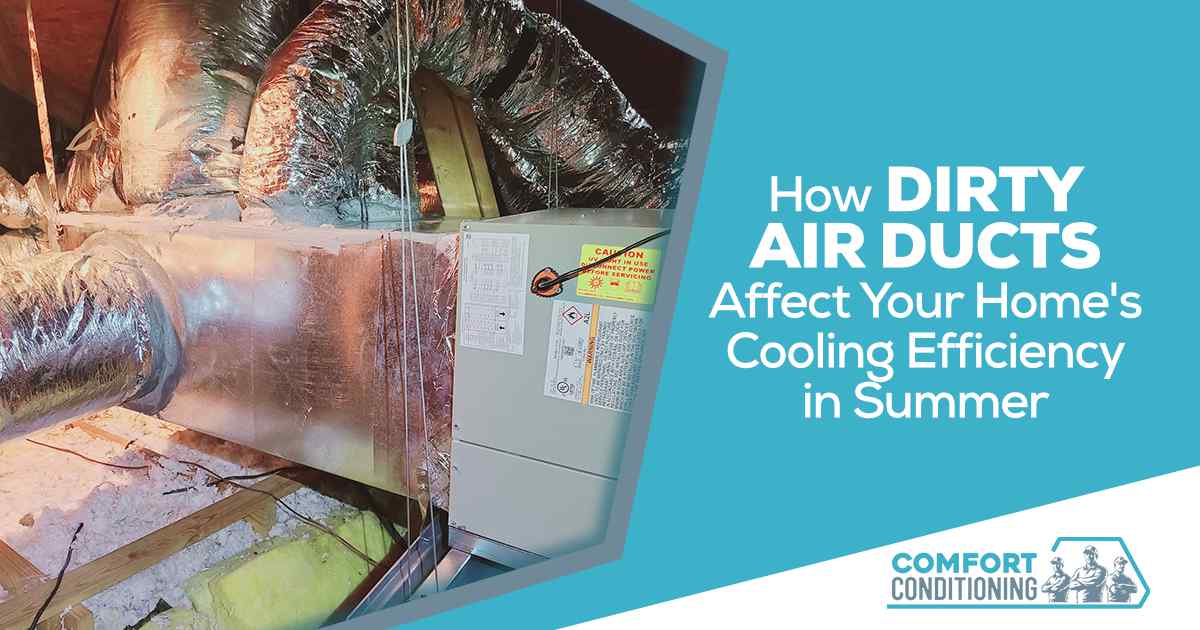
When summer temperatures rise, homeowners often assume that an air conditioner that runs but does not cool the home properly needs repair or maintenance. However, the cooling equipment is only one part of the system responsible for moving conditioned air throughout a home. When an AC has already been serviced, rooms remain uncomfortable, dirty, or contaminated ductwork may be one overlooked factor affecting airflow and cooling performance.
How Air Ducts Affect Home Cooling
An air conditioning system does more than cool air at the indoor equipment before sending it back into the home. The blower moves conditioned air through supply ducts to different rooms, while return ducts carry air back toward the HVAC equipment for another cooling cycle. Because ductwork provides the pathway for conditioned air, problems within that distribution system can affect how effectively cooling reaches the living spaces.
A properly functioning duct system helps distribute conditioned air where it is needed throughout the home. When airflow through part of that system becomes restricted, the amount of cooled air reaching certain rooms may be reduced. This means a home can have functioning cooling equipment yet still experience comfort problems due to issues in the air distribution system.
The U.S. Department of Energy identifies duct systems as an important component of residential heating and cooling performance and notes that duct problems can affect the effectiveness and cost of heating and cooling. That does not mean every duct imperfection or small amount of dust automatically creates a measurable efficiency problem. Instead, significant contamination, restrictions, leaks, or other ductwork conditions may interfere with the airflow needed for effective cooling.
What Happens When Dirt and Debris Build Up in Ducts?
Air ducts can collect household dust, pet dander, debris, and other contaminants over time, particularly when conditions allow those materials to accumulate within the system. Minor amounts of dust do not necessarily mean the ductwork needs cleaning or that cooling performance has been affected. The concern becomes greater when substantial buildup or contamination interferes with airflow through portions of the system.
Restricted Airflow
Significant accumulation inside ductwork can reduce the available pathway for air to move through affected portions of the system. When airflow is restricted, the HVAC equipment may not be able to deliver conditioned air as effectively to every part of the home. Weak airflow from certain registers can therefore be one indication that the duct system deserves further evaluation.
Reduced Air Delivery
Cooling performance depends not only on how cold the conditioned air is, but also on whether enough of that air reaches the rooms that need it. If a portion of the duct system has restricted airflow, less conditioned air may reach the spaces served by that section. The result can be a noticeable difference in comfort even when the air conditioner itself appears to be operating normally.
Uneven Temperatures
Uneven temperatures can become especially noticeable during the summer when outdoor heat places greater demand on residential cooling systems. A bedroom, upstairs area, or other part of the home may remain warmer when airflow to that area is insufficient. Dirty ductwork is not the only possible explanation for uneven cooling, but significant contamination can be one factor worth investigating.
Longer System Operation
When conditioned air is not distributed effectively, the home may have more difficulty reaching the temperature selected on the thermostat. The HVAC system may consequently need to operate for longer periods while attempting to satisfy the cooling demand. Longer operation can have several possible causes, so persistent symptoms should be evaluated rather than automatically attributed to dirty ducts.
Signs Ductwork May Be Contributing to Cooling Problems
Homeowners do not have to assume that dirty ducts are responsible for every cooling complaint, but certain patterns can indicate that the ductwork deserves attention. Weak airflow from one or more vents, noticeable differences in temperature between rooms, or persistent comfort problems after an AC service can justify looking beyond the equipment itself. Visible dust around registers, recurring dust accumulation, or musty odors may also indicate that the duct system or other HVAC components warrant professional evaluation.
A particularly serious situation occurs when an air conditioner has already received service but the original comfort complaint remains. Equipment maintenance can address problems involving components such as the thermostat, blower, coils, refrigerant, electrical systems, or condensate drainage, depending on the service performed. If the equipment is functioning properly while airflow remains weak or uneven, the duct system may need to be considered as another part of the overall cooling system.
These symptoms do not prove that dirty ducts are causing the problem. Dirty filters, blocked vents, duct leaks, poor duct design, blower problems, refrigerant issues, thermostat problems, and other HVAC conditions can produce similar symptoms. A professional evaluation can help determine whether contamination is actually present and whether cleaning or another type of HVAC service is appropriate.
Why AC Service Does Not Always Solve a Ductwork Problem
An air conditioner and its ductwork perform different but connected jobs within a home’s cooling system. The HVAC equipment conditions the air, while the duct system provides the pathways that distribute that conditioned air throughout the home and return air to the equipment. Addressing a problem with the equipment does not automatically address a separate problem affecting the distribution system.
For example, an AC service may determine that the primary cooling equipment is operating as expected while a homeowner continues to notice weak airflow in particular rooms. If the equipment is producing conditioned air but the distribution system is not moving that air effectively, additional attention may be needed beyond the original equipment service. This is why persistent cooling complaints can sometimes require evaluation of both the HVAC equipment and the ductwork.
A properly serviced air conditioner still depends on a functional pathway for conditioned air to reach the rooms it is intended to cool. Significant contamination within that pathway may contribute to restricted airflow and uneven distribution under the right conditions. Looking at the entire cooling system rather than focusing exclusively on the outdoor or indoor equipment can help homeowners better understand persistent comfort problems.
Can Dirty Air Ducts Also Affect Indoor Air Quality?
Cooling efficiency is the primary concern when evaluating how dirty ductwork may affect summer comfort, but duct contamination can also influence what circulates through an HVAC system. Household dust, pet dander, construction debris, and other contaminants may accumulate within ductwork or other HVAC components when conditions allow contamination to develop. Materials present within the system may become part of the air circulating through the home when the HVAC system operates.
This secondary concern does not mean dirty ducts automatically cause allergies, asthma, or respiratory illness. Air quality inside a home can be influenced by many sources, including outdoor air, household activities, filtration, moisture, and other HVAC conditions. For that reason, duct cleaning should not be presented as a universal solution for health concerns or as a guarantee that all indoor allergens will be eliminated.
Instead, the condition of the ductwork can be considered as one part of the overall indoor environment. When homeowners notice substantial dust, persistent odors, or visible contamination along with airflow and comfort concerns, professional evaluation can help determine whether the duct system requires attention. Keeping this issue in context helps distinguish the potential air-quality contribution of contaminated ductwork from the primary question of summer cooling performance.
When Should Homeowners Consider Air Duct Cleaning?
Air duct cleaning may be worth considering when there is evidence of significant contamination or when persistent airflow concerns suggest that the ductwork could be contributing to the problem. Situations such as substantial visible dust or debris, recurring dust accumulation, musty odors, recent construction or remodeling, or persistent comfort concerns may warrant an inspection of the system. The appropriate response depends on the actual condition of the ductwork rather than a fixed cleaning schedule that applies to every home.
Homeowners should also avoid assuming that routine air duct cleaning is necessary simply because a certain amount of dust is visible around a vent. The presence of dust does not by itself establish that duct cleaning will improve cooling performance. A condition-based evaluation is more useful because it can help determine whether contamination is significant enough to justify cleaning or whether another HVAC issue may better explain the symptoms.
When cleaning is appropriate, the goal should be to address accumulated contamination throughout the relevant portions of the system rather than simply vacuuming the most accessible registers. A comprehensive approach may involve supply and return ducts as well as other accessible components associated with the air distribution system. The specific scope of work should depend on the condition and configuration of the HVAC and ductwork.
Professional Air Duct Cleaning Can Address Accumulated Debris
Professional air duct cleaning provides a way to evaluate and address significant contamination when ductwork has accumulated enough debris to warrant attention. A professional process can identify areas requiring cleaning and use appropriate equipment to remove accumulated material while taking the condition of the ductwork into account. This is different from assuming that every cooling problem requires cleaning or that cleaning alone will resolve unrelated HVAC issues.
For homeowners who continue to experience weak airflow, uneven cooling, excessive dust, or other concerns after their AC has been serviced, professional air duct cleaning can be considered as part of a broader evaluation of the cooling system. The condition of the ductwork can help determine whether accumulated debris is contributing to airflow problems and whether cleaning is an appropriate next step.
Check the Ductwork When Cooling Problems Persist
Summer cooling performance depends on more than the condition of the air conditioner itself, because conditioned air must also move effectively through the home’s duct system. Significant contamination may contribute to restricted airflow, reduced air delivery, uneven temperatures, or longer system operation, although these symptoms can have many other causes. When an AC has already been serviced but cooling or airflow complaints remain, the ductwork may deserve attention as part of the next evaluation.
Homeowners experiencing persistent weak airflow, uneven cooling, excessive dust, or other signs of possible duct contamination can schedule an evaluation with Comfort Conditioning. A professional assessment can help determine whether accumulated debris is present and whether air duct cleaning is appropriate for the home’s particular system. Taking a condition-based approach allows the ductwork to be evaluated as one part of the overall cooling system rather than assuming that cleaning is the answer to every summer comfort problem.
Is Your AC Running, but Your Home Still Feels Unevenly Cooled?
Dirty or heavily contaminated ductwork may be affecting airflow and comfort. Schedule professional at https://comfortconditioning.com/services/air-duct-cleaning/ evaluation with Comfort Conditioning to find out whether your ductwork could be contributing to the problem and determine the right next step for a more comfortable home.