
Air Duct Cleaning
Comfort Conditioning LLC provides air duct cleaning for residential and commercial properties.
Contact Us
Our HVAC technicians perform air duct cleaning by using specialized vacuum equipment and rotary brushes to remove accumulated dust, debris, and contaminants from supply and return air ducts throughout the entire ventilation system. Each air duct cleaning follows NADCA industry standards to ensure thorough removal of pollutants while protecting ductwork integrity and maintaining proper airflow. Property owners typically schedule air duct cleaning when they notice excessive dust accumulation, musty odors, or reduced airflow from vents. During the air duct cleaning process, customers can expect temporary noise from powerful vacuum equipment and complete access to all ductwork components. Proper air duct cleaning execution prevents indoor air quality issues and maintains efficient HVAC system operation for years following service completion.
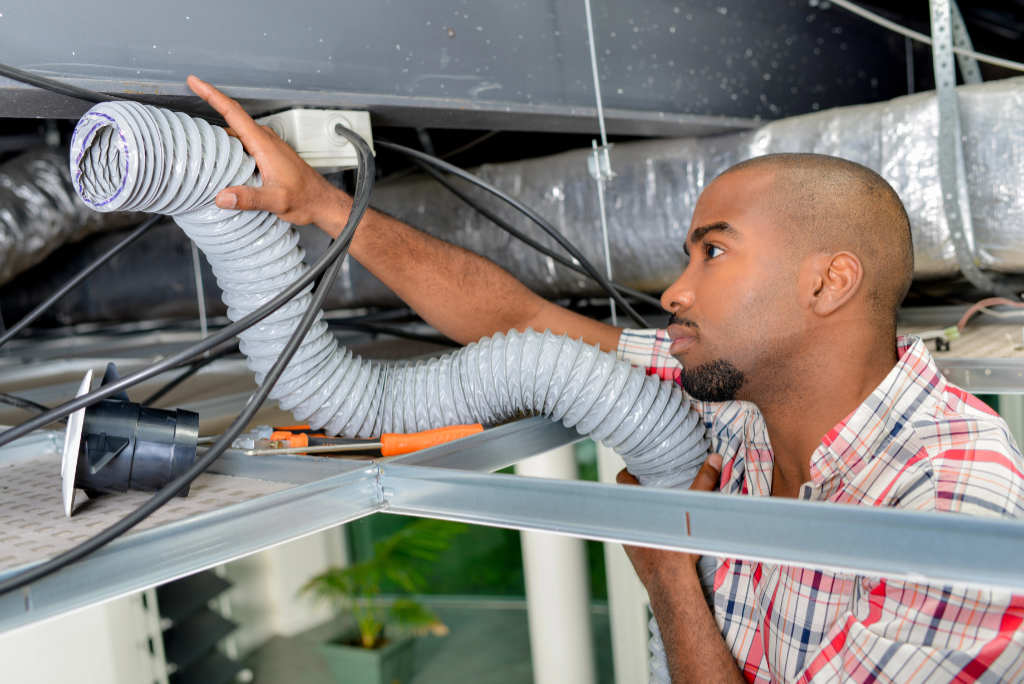
What Air Duct Cleaning Includes
Air Duct Cleaning Process
System Assessment and Preparation
HVAC technicians inspect the entire ductwork system to identify access points, measure duct dimensions, and evaluate contamination levels. All vent covers are removed and the system is prepared for cleaning equipment setup.
Negative Pressure Establishment
Powerful truck-mounted or portable vacuum equipment creates negative pressure throughout the ductwork system. This containment prevents debris from spreading into living spaces during the cleaning process.
Mechanical Cleaning Execution
Rotary brushes, air whips, and compressed air tools dislodge accumulated dust, debris, and contaminants from duct walls. Each section receives thorough mechanical agitation to ensure complete contaminate removal.
Debris Extraction and Verification
High-powered vacuum systems extract all loosened debris while technicians verify complete cleaning through visual inspection. Any remaining contamination receives additional mechanical cleaning until removal is complete.
Understanding Air Duct Cleaning
Air duct cleaning involves the comprehensive removal of dust, debris, biological contaminants, and other accumulated materials from heating, ventilation, and air conditioning system ductwork. This technical service requires specialized equipment, industry knowledge, and systematic approach to achieve effective contamination removal without damaging ductwork components. Professional air duct cleaning addresses indoor air quality concerns while maintaining proper system airflow and efficiency.
How Professional Air Duct Cleaning Works
Professional air duct cleaning utilizes powerful vacuum systems combined with mechanical agitation tools to remove contaminants from ductwork surfaces. Truck-mounted units generate 5,000 to 15,000 cubic feet per minute of airflow, creating sufficient negative pressure to extract debris while containing contamination. Rotary brush systems, pneumatic tools, and compressed air devices mechanically dislodge accumulated materials from duct walls, joints, and corners where standard airflow cannot reach. The cleaning process requires systematic section-by-section treatment, ensuring complete coverage of supply ducts, return ducts, main trunk lines, and branch connections. HVAC technicians use inspection cameras to verify cleaning effectiveness and identify areas requiring additional attention. Air duct cleaning equipment must maintain containment throughout the process, preventing cross-contamination between cleaned and uncleaned sections. Professional-grade HEPA filtration systems capture extracted particles, preventing their release into outdoor environments. The combination of mechanical agitation and high-volume extraction ensures thorough contamination removal while preserving ductwork integrity and maintaining proper system airflow characteristics.
Air Duct Cleaning Contamination Variables
Several factors influence the extent and type of contamination requiring air duct cleaning services. Pet dander, cooking residue, tobacco smoke, and household dust create organic buildup that promotes microbial growth within ductwork systems. Construction activities generate sawdust, drywall particles, and insulation fragments that accumulate in ducts over time. Geographic location affects contamination patterns, with coastal areas experiencing salt air corrosion and desert regions dealing with fine sand infiltration. HVAC system age impacts contamination levels, as older ductwork often contains asbestos materials or degraded insulation requiring specialized handling during air duct cleaning. Filter maintenance practices significantly affect contamination accumulation, with inadequate filtration allowing particles to bypass protection and settle throughout the system. Moisture intrusion from roof leaks, plumbing failures, or condensation creates ideal conditions for mold growth requiring targeted air duct cleaning approaches. System design variables such as duct material, joint construction, and access panel placement influence cleaning methodology and equipment selection. Understanding these contamination variables allows HVAC technicians to customize air duct cleaning procedures for maximum effectiveness and long-term system protection.
Industry Standards for Air Duct Cleaning
The National Air Duct Cleaners Association establishes comprehensive standards governing professional air duct cleaning practices and quality assurance protocols. NADCA standards require pre-cleaning system inspection, contamination documentation, and post-cleaning verification to ensure service effectiveness. Air duct cleaning technicians must demonstrate competency in equipment operation, safety procedures, and contamination identification through certification programs. Industry standards specify minimum vacuum system performance requirements, with truck-mounted units achieving 5,000 CFM airflow and 10 inches of water column static pressure. Mechanical cleaning tools must meet dimensional specifications to fit standard ductwork sizes while providing effective debris removal without causing damage. Air duct cleaning procedures include mandatory containment protocols to prevent cross-contamination and protect building occupants during service delivery. Environmental protection standards govern debris disposal methods and require HEPA filtration for extracted materials. Quality assurance standards mandate before-and-after documentation through photography and airflow measurements to verify air duct cleaning effectiveness. Professional liability requirements ensure technicians carry adequate insurance coverage for potential ductwork damage or indoor air quality issues. Adherence to these industry standards distinguishes professional air duct cleaning from inadequate services that fail to achieve meaningful contamination removal.
Signs Indicating Need for Air Duct Cleaning
Multiple indicators suggest when property owners should schedule professional air duct cleaning services to address contamination accumulation and system performance issues. Visible dust accumulation around supply vents, return air grilles, or diffusers indicates significant ductwork contamination requiring immediate attention. Persistent musty odors emanating from vents suggest microbial growth within ductwork that air duct cleaning can effectively address. Reduced airflow from individual vents or uneven heating and cooling distribution often results from debris accumulation blocking ductwork passages. Increased frequency of respiratory issues, allergies, or asthma symptoms among building occupants may indicate contaminated air circulation requiring air duct cleaning intervention. Recent construction or renovation activities introduce substantial dust and debris into ductwork systems, necessitating thorough cleaning before system operation resumes. HVAC filter replacement frequency increases dramatically when ductwork contamination overwhelms filtration capacity, signaling the need for comprehensive air duct cleaning. Energy consumption increases without corresponding comfort improvements often indicate restricted airflow from contaminated ductwork requiring professional cleaning services. Pest infestations within ductwork leave droppings, nesting materials, and odors that demand specialized air duct cleaning approaches for complete remediation. Property purchases, especially older buildings, warrant air duct cleaning to establish baseline cleanliness and remove previous occupant contamination.
Air Duct Cleaning FAQs
What Does Air Duct Cleaning Include?
Air duct cleaning includes removal of dust and debris from supply ducts, return ducts, main trunk lines, and branch connections. The service covers blower compartment cleaning, air handler cleaning, vent cover cleaning, and ductwork access panel sealing. HVAC technicians use mechanical brushes and high-powered vacuum systems to remove accumulated contaminants throughout the entire ventilation system.
How Often Should Air Duct Cleaning Be Performed?
Most residential properties require air duct cleaning every 3 to 5 years under normal conditions. Commercial facilities may need more frequent cleaning based on occupancy levels and contamination sources. Properties with pets, smokers, or recent construction may benefit from more frequent air duct cleaning services to maintain indoor air quality.
What Equipment is Used During Air Duct Cleaning?
Professional air duct cleaning utilizes truck-mounted or portable vacuum systems generating 5,000 to 15,000 CFM airflow for debris extraction. Rotary brushes, pneumatic tools, and compressed air devices mechanically dislodge contaminants from ductwork surfaces. Inspection cameras verify cleaning completeness while HEPA filtration systems capture extracted particles to prevent environmental release.
How Long Does Air Duct Cleaning Take to Complete?
Typical residential air duct cleaning requires 2 to 4 hours depending on system size and contamination levels. Commercial properties may require 4 to 8 hours or multiple service visits for complete cleaning. The duration includes system preparation, mechanical cleaning execution, debris extraction, and final verification of cleaning effectiveness throughout all ductwork components.