
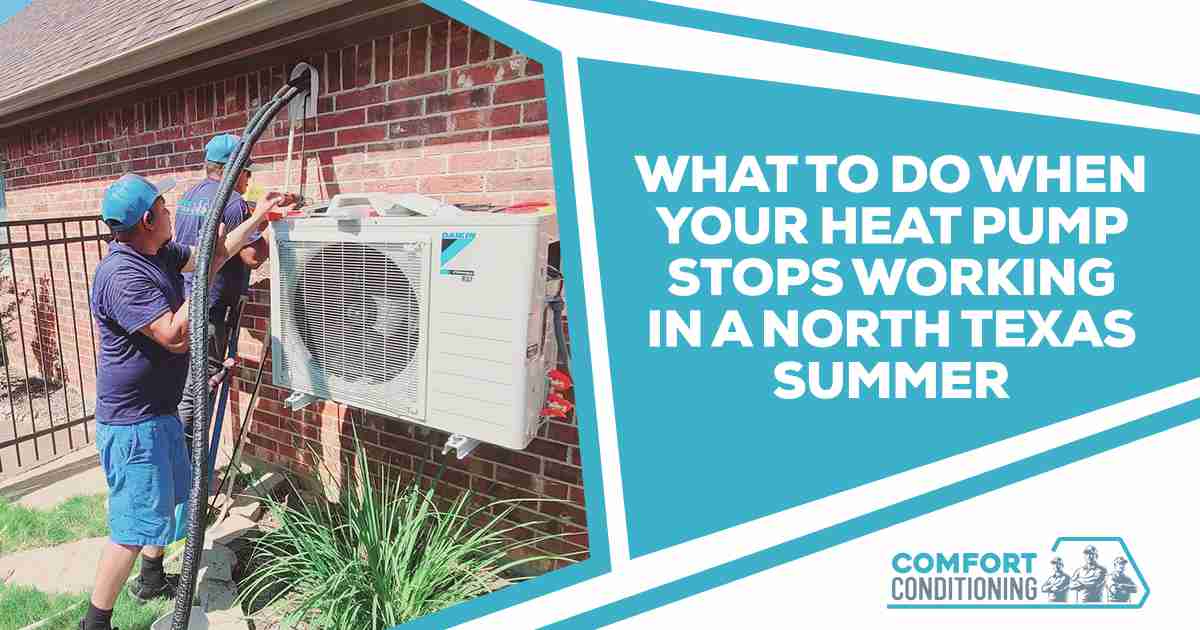
A heat pump that stops cooling during a North Texas summer can quickly become uncomfortable, especially when outdoor temperatures remain high for extended periods. A system that is blowing warm air, running continuously, or failing to maintain the thermostat setting may have several possible causes. Before assuming the system needs major repairs, homeowners can perform a few safe checks while recognizing when professional HVAC diagnosis is necessary.
What to Check When a Heat Pump Stops Cooling
When a heat pump stops working properly, homeowners can begin with simple observations that do not require opening the equipment or handling electrical components. Checking the thermostat, air filter, and outdoor unit can sometimes identify a basic issue affecting system performance. If these checks do not resolve the problem, further troubleshooting should be left to a qualified HVAC technician.
Check the Thermostat When the Heat Pump Is Not Cooling
The thermostat should be set to cooling mode with the desired temperature below the current indoor temperature. Homeowners should also confirm that the thermostat is powered and responding normally when settings are changed. If the thermostat displays a low-battery warning or otherwise appears unresponsive, replacing the batteries may resolve a simple control issue when the thermostat uses replaceable batteries.
A thermostat setting that appears correct does not necessarily mean the heat pump itself is operating properly. If the system continues running without lowering the indoor temperature, the problem may involve airflow, refrigerant, the reversing valve, or another component. Homeowners should avoid opening the thermostat beyond basic battery replacement or attempting to alter wiring.
Check the Air Filter and Airflow
A severely dirty air filter can restrict the amount of air moving through a heat pump system. Restricted airflow can reduce cooling performance and may contribute to other operating problems, including conditions that cause coils to freeze. Homeowners can inspect the filter and replace it if it is visibly dirty and the system uses a replaceable filter.
Airflow problems can also occur when vents are obstructed or when the system is unable to move air effectively through the home. If replacing a dirty filter does not improve cooling, the underlying problem may require professional evaluation. Homeowners should not remove equipment panels or attempt to access internal blower, electrical, or coil components.
Check the Outdoor Heat Pump Unit
The outdoor heat pump unit should be checked visually to determine whether it appears to be operating normally. Homeowners can look for obvious debris around the unit and note unusual sounds, odors, visible ice, or other changes from normal operation. The area around the outdoor unit should remain reasonably clear so that airflow is not unnecessarily restricted.
A homeowner should never remove electrical covers or attempt to repair wiring inside the outdoor unit. Electrical components can present serious hazards, and diagnosing equipment faults may require specialized tools and training. Any unusual electrical behavior, burning odor, or persistent operating problem should be reported to a qualified technician.
Why a Heat Pump May Stop Cooling During Summer
A heat pump can stop cooling effectively for several different reasons, and the visible symptom does not always identify the underlying failure. Some problems involve airflow or basic operating conditions, while others involve refrigerant, mechanical components, or electrical systems. Understanding the major possibilities can help homeowners recognize when a heat pump problem has moved beyond simple troubleshooting.
Refrigerant Problems Can Cause Heat Pump Cooling Issues
Heat pumps use refrigerant to transfer heat and provide both heating and cooling. A refrigerant leak or insufficient refrigerant can interfere with that heat-transfer process and contribute to weak cooling, longer operating cycles, or difficulty maintaining the desired indoor temperature. These symptoms can have other causes as well, so homeowners should not assume that refrigerant is the problem based on performance alone.
Refrigerant problems require professional diagnosis because identifying and correcting the issue involves specialized HVAC equipment and procedures. Homeowners should not attempt to add refrigerant, locate leaks, or work with refrigerant lines themselves. If cooling performance remains poor after basic checks, professional evaluation can determine whether a refrigerant issue is contributing to the problem.
A Reversing Valve Problem Can Affect Heat Pump Cooling
The reversing valve is an important component that allows a heat pump to change the direction of refrigerant flow between heating and cooling operation. If the valve malfunctions, the system may have difficulty switching into or remaining in the appropriate operating mode. A heat pump may continue running while failing to provide the expected cooling during summer.
Because the reversing valve is part of the heat pump’s internal refrigeration system, homeowners should not attempt to diagnose or repair it. A technician can evaluate the system and determine whether the reversing valve or another component is responsible for the cooling problem. This distinction is important because similar symptoms can result from several different equipment issues.
Frozen Coils Can Reduce Heat Pump Cooling Performance
Ice or frost on a heat pump can indicate that the system is not operating under normal conditions. Restricted airflow, refrigerant problems, and other issues can contribute to freezing, making visible ice an important symptom rather than a repair homeowners should attempt to address themselves. Continued operation while the system is frozen may prevent effective cooling and can make it harder for the equipment to operate normally.
Homeowners should not chip away ice or attempt to access internal coils to remove it. If a heat pump repeatedly freezes or remains covered in ice after basic airflow checks, professional evaluation is appropriate. A technician can determine what is causing the freezing rather than simply treating the visible ice as the problem.
When a Heat Pump Problem Requires a Technician
Some heat pump problems can be observed safely from outside the equipment, but issues involving refrigerant, electricity, internal coils, or specialized components require professional diagnosis. Homeowners should limit troubleshooting to basic settings, filter inspection, airflow observations, and other checks that do not require opening the equipment. Professional assistance is appropriate when a problem persists or involves components that cannot be safely evaluated at home.
Professional assistance is appropriate when a heat pump has:
- A suspected refrigerant leak or refrigerant-related problem.
- Electrical faults, wiring issues, or repeated electrical shutdowns.
- A suspected reversing valve problem.
- Persistent or recurring frozen coils.
- Unusual noises, burning odors, or repeated system shutdowns.
- Internal component problems that cannot be evaluated through basic homeowner checks.
If the heat pump continues blowing warm air or fails to cool the home after basic checks, homeowners should avoid repeatedly resetting the system or attempting repairs. A qualified HVAC technician can determine what is preventing the system from cooling properly and identify the appropriate repair.
What to Do When a Heat Pump Is Blowing Warm Air in Summer
A heat pump blowing warm air during summer can have several possible causes, so the symptom alone does not identify the specific failure. Homeowners should confirm that the thermostat is set to cooling, check the air filter, and observe the outdoor unit for visible ice, debris, or unusual operation. If these basic checks do not restore normal cooling, professional diagnosis is appropriate rather than attempting repairs to refrigerant, electrical, or internal components.
When Heat Pump Repair Is the Right Next Step
Heat pump repair is generally the appropriate next step when a system continues to have cooling problems after safe homeowner checks have been completed. Problems involving refrigerant, reversing valves, frozen coils, electrical components, or internal equipment require professional attention rather than do-it-yourself repairs. Prompt diagnosis can help identify the cause of the problem and determine what needs to be corrected for the system to return to normal cooling operation.
Homeowners who need professional assistance can learn more about Comfort Conditioning’s heat pump repair services. The service page provides a dedicated resource for homeowners whose heat pump requires professional diagnosis or repair. Keeping the service information separate from this troubleshooting article also allows the blog to remain focused on helping homeowners understand what to do when their heat pump stops cooling.
How to Reduce Heat Pump Cooling Problems During Summer
Homeowners can reduce the likelihood of recurring cooling problems by checking and replacing the air filter as appropriate and keeping the outdoor unit reasonably clear of debris and obstructions. They should also pay attention to declining cooling performance, weak airflow, unusual noises, or recurring ice rather than repeatedly resetting the system. Recurring symptoms can indicate an underlying problem even when the heat pump temporarily returns to normal operation, making professional evaluation appropriate when cooling issues persist.
Call Comfort Conditioning for Heat Pump Repair
A heat pump that stops cooling during a North Texas summer can have a range of possible causes, from restricted airflow to problems involving refrigerant or internal components. Homeowners can safely begin with basic thermostat, filter, and visual checks, but repairs involving electrical systems, refrigerant, coils, or other internal components should be handled by a qualified HVAC technician. When a heat pump continues blowing warm air or fails to cool properly, homeowners can contact Comfort Conditioning for professional heat pump diagnosis and repair.