
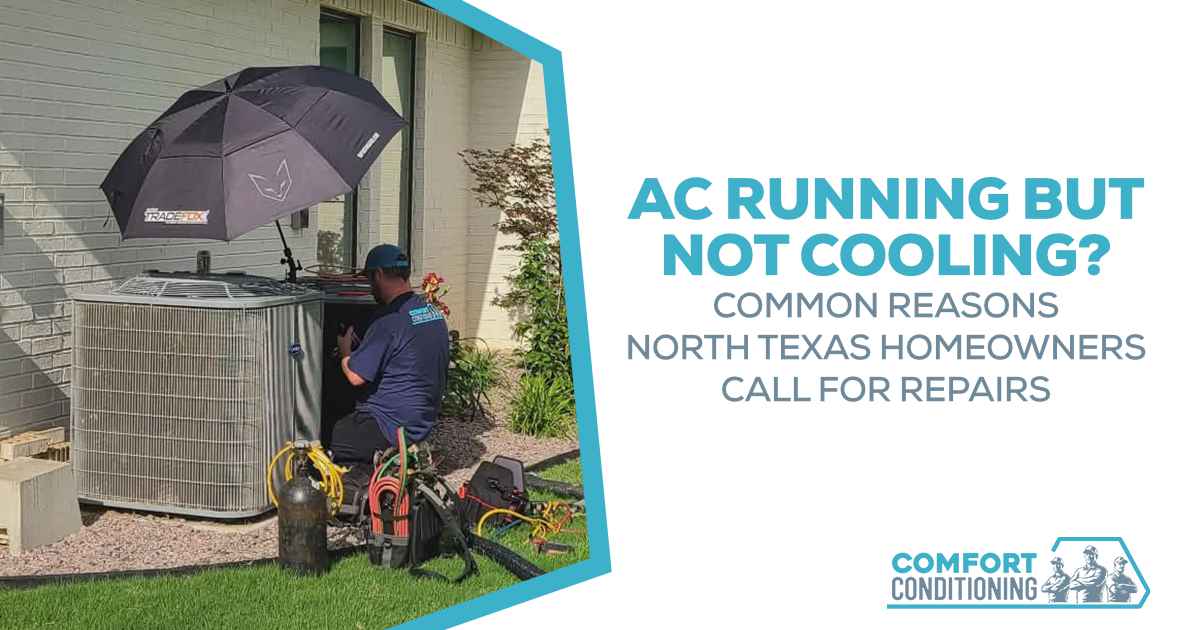
An air conditioner that runs without adequately cooling the home can leave North Texas homeowners wondering whether the system is simply working harder because of the heat or whether something is wrong. Longer cooling cycles can occur during periods of high outdoor temperatures, but an AC that consistently blows warm air or cannot reach the thermostat setting may have an underlying problem. Understanding the common causes can help homeowners identify simple checks they can safely perform and recognize when professional AC repair is appropriate.
What Does It Mean When an AC Runs but Does Not Cool?
An air conditioner can appear to be operating normally while still failing to remove enough heat from the home. Homeowners may notice warm air from the vents, weak airflow, uneven temperatures between rooms, or a system that runs for long periods without reaching the selected temperature. These symptoms can have several different causes, so the fact that the AC is running does not necessarily mean that it is cooling properly.
North Texas summers can place substantial demand on an air conditioning system, particularly during periods of sustained heat. A properly operating AC may need to run for extended periods under those conditions, but consistently failing to reach the thermostat setting is a different concern. When cooling performance remains inadequate after basic checks, the problem may involve airflow, coils, refrigerant, electrical components, controls, or another part of the system.
Common Reasons an AC Is Running but Not Cooling
Restricted Airflow From a Dirty Air Filter
A clogged or heavily loaded air filter is one of the simpler problems that can interfere with air conditioning performance. When a filter becomes difficult for air to pass through, airflow through the system can decrease, and the AC may need to operate longer to provide the same level of cooling. Homeowners may notice weaker airflow from the vents, longer cooling cycles, uneven temperatures, or a general decline in comfort.
Checking the air filter is one of the few basic AC checks that homeowners can generally perform without opening the equipment. If the filter is visibly dirty, replacing it with the correct size and type can improve airflow when the filter is the primary restriction. If the AC continues running without adequately cooling after the filter has been replaced, another underlying issue may need to be identified.
Dirty or Frozen Coils Can Reduce Cooling Performance
The evaporator and condenser coils play important roles in an air conditioner’s ability to transfer heat. The indoor evaporator coil absorbs heat from indoor air, while the outdoor condenser coil releases that heat outside, so significant dirt buildup can interfere with efficient heat transfer. When coil performance is compromised, the system may run longer while producing less effective cooling.
A frozen evaporator coil can also be associated with poor cooling and may appear as ice on or around the indoor equipment. Restricted airflow and refrigerant-related problems can contribute to coil freezing, which means the presence of ice does not necessarily identify the underlying cause. Homeowners should avoid dismantling the equipment or attempting extensive internal coil cleaning and should seek professional evaluation when freezing occurs repeatedly.
Low Refrigerant or a Refrigerant Leak Can Affect Cooling
Refrigerant is essential to the air conditioner’s cooling cycle because it allows the system to absorb heat indoors and release that heat outside. When refrigerant levels are too low, the AC may run for extended periods without providing the expected cooling, and symptoms such as ice formation can sometimes occur. Low refrigerant should not automatically be treated as a simple need to add more refrigerant because a leak or another system problem may be responsible.
Refrigerant diagnosis and service require specialized equipment and should be handled by a qualified HVAC professional. Homeowners should not attempt to handle refrigerant, open refrigerant lines, or determine the system charge themselves. If the AC continues running without adequately cooling after basic airflow and thermostat checks, professional diagnosis can determine whether a refrigerant-related problem is contributing to the loss of cooling.
A Failing Capacitor or Electrical Component May Affect Operation
An air conditioner’s motors and other electrical components must operate correctly for the system to complete its cooling cycle. A failing capacitor, for example, can interfere with the operation of components such as the condenser fan or compressor and may contribute to starting difficulties, unusual humming, or poor system performance. An outdoor unit that does not appear to be operating normally can therefore indicate that an electrical or component problem requires attention.
Capacitors and other HVAC electrical components are not appropriate DIY repair projects for most homeowners. Electrical equipment can present serious shock hazards, and diagnosing the actual source of the problem requires more than replacing a component based on a symptom. Electrical testing, capacitor replacement, and related repairs should be left to trained HVAC professionals.
Thermostat or Control Problems Can Create Cooling Issues
Not every cooling problem begins with the air conditioner’s mechanical components. An incorrect thermostat setting, an incorrect operating mode, a control issue, or a thermostat that is not accurately communicating the cooling demand can cause the system to behave differently than expected. Homeowners can begin by confirming that the thermostat is set to cooling and that the selected temperature is appropriate for the desired indoor conditions.
Thermostat batteries can also be checked and replaced when the particular thermostat uses replaceable batteries. If the thermostat appears to be operating correctly but the home still does not reach the desired temperature, the issue may lie elsewhere in the system. Persistent cooling problems should not be attributed to the thermostat without proper diagnosis, particularly when other symptoms are present.
A Compressor or Major Component May Be Failing
The compressor is a central part of the air conditioner’s refrigeration cycle, so problems involving this component can significantly affect cooling performance. An AC may still appear to run when a major component is struggling, making it possible for homeowners to assume that the system is functioning normally simply because air continues to come from the vents. Unusual noises, starting difficulties, repeated shutdowns, or a sudden decline in cooling can indicate that a more significant component problem needs evaluation.
Compressor and other major component problems require professional diagnosis because several different faults can produce similar symptoms. Attempting to determine the condition of these components without the appropriate tools and training can lead to incorrect conclusions or unnecessary equipment damage. A qualified technician can evaluate the system as a whole rather than replacing a component based only on the fact that the AC is not cooling.
What North Texas Homeowners Can Safely Check
When an AC is running but not cooling, homeowners can begin with a few simple observations before arranging professional service. Confirming the thermostat setting, checking the air filter, making sure supply vents are open, and looking for obvious debris around the outdoor unit can help identify straightforward issues that may affect performance. These checks can provide useful information without requiring homeowners to open electrical compartments or interfere with the air conditioner’s internal components.
The outdoor unit should have reasonable clearance from obvious leaves, grass, and other debris that could interfere with airflow around the equipment. Homeowners can also observe whether the outdoor unit appears to be operating, whether airflow from the vents feels unusually weak, and whether ice is visible on accessible portions of the system. These observations can help a technician understand the symptoms, but they do not replace a complete diagnostic evaluation when the cooling problem continues.
There are several actions homeowners should avoid when an AC is not cooling. Refrigerants should not be added without professional diagnosis, and electrical panels, capacitors, compressors, refrigerant lines, and internal components should not be opened or manipulated as part of a DIY repair. When a problem extends beyond basic thermostat, filter, vent, or exterior-obstruction checks, professional service is the safer and more reliable next step.
When an AC Problem Requires Professional Repair
Professional repair becomes appropriate when basic homeowner checks do not restore normal cooling or when symptoms point toward a component-level problem. An AC that runs continuously without reaching the desired temperature, repeatedly blows warm air, develops ice, produces unusual noises, has persistent weak airflow, or struggles to start should be evaluated rather than left to operate indefinitely. Sudden changes in cooling performance can also warrant attention, particularly when the system previously operated normally.
Refrigerant problems, electrical faults, capacitor issues, compressor concerns, and internal component failures generally require specialized tools and training. Continuing to operate a system with an unresolved problem may increase energy use, reduce comfort, or place additional strain on affected components. A professional diagnosis can identify the underlying cause and determine whether a repair is appropriate instead of relying on guesswork or replacing parts unnecessarily.
For homeowners who continue experiencing inadequate cooling after basic checks, AC repair services provide an appropriate next step when the problem requires professional attention. A technician can evaluate whether the issue involves airflow, refrigerant, electrical components, coils, controls, or another part of the cooling system. Identifying the actual cause allows homeowners to make an informed decision about restoring reliable cooling rather than continuing to operate an underperforming system without understanding why it is struggling.
Why Persistent Cooling Problems Should Not Be Ignored
An AC that continues running without adequately cooling the home can affect both comfort and system performance. Longer operation may increase energy consumption, while an unresolved mechanical or electrical issue can place additional strain on affected components. Addressing the problem does not necessarily mean the system needs to be replaced because many cooling concerns can be traced to a specific condition that can be diagnosed and repaired.
The important distinction is between an AC that is working through an unusually hot day and one that consistently cannot meet the home’s cooling demand. Occasional long cycles may be normal when outdoor conditions are extreme, but persistent warm air, weak airflow, unusual system behavior, or an inability to reach the thermostat setting should not simply be dismissed. Early attention can help homeowners understand the cause before the cooling problem becomes a larger comfort or equipment concern.
An AC that is running but not cooling properly can have several possible causes, ranging from a clogged filter or thermostat setting to coil problems, refrigerant issues, electrical component failures, or major mechanical concerns. Homeowners can safely begin with basic checks such as inspecting the filter, confirming thermostat settings, ensuring vents are unobstructed, and looking for obvious debris around the outdoor unit. When those checks do not resolve the problem, professional diagnosis can identify the underlying issue and help restore dependable cooling for a North Texas home.
AC Running but Still Not Cooling? Get the Problem Checked.
When basic checks do not restore adequate cooling, professional diagnosis can help identify the underlying problem and determine the appropriate repair. Addressing persistent cooling issues can help North Texas homeowners restore reliable comfort without relying on guesswork.