
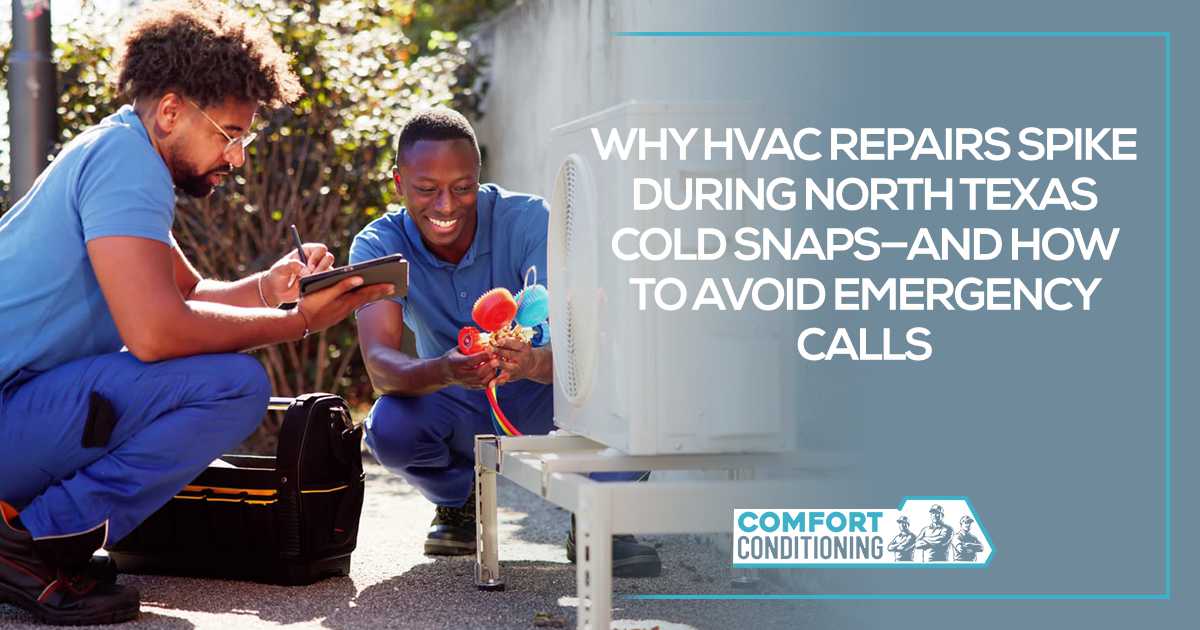
Homeowners in Krum, Denton, Sanger, and Ponder often see an increase in HVAC repair needs when temperatures drop quickly. Sudden cold snaps put heavy stress on heating systems, especially units that have not been serviced before winter. When equipment works harder than usual, minor issues can turn into major problems, resulting in emergency HVAC repair calls and unexpected heating outages.
Let’s dig into why HVAC systems frequently fail during rapid temperature drops, what early warning signs homeowners should watch for, and how timely HVAC service can prevent costly breakdowns. Our goal is to help homeowners understand common risks and prepare their systems before freezing weather arrives. Comfort Conditioning’s experience in North Texas heating repair provides the framework for these recommendations.
Why HVAC Repair Needs Increase During North Texas Cold Snaps
Sudden Temperature Drops Strain Heating Systems
North Texas cold snaps often arrive with little warning. When temperatures fall quickly, heating systems must work harder to maintain steady indoor comfort. This rapid increase in demand can expose weak components, clogged filters, and airflow restrictions. Units that struggled during mild weather are more likely to fail when outside temperatures shift from warm to freezing in just a few hours.
Frequent Start-Stop Cycles Lead to Component Failure
During sudden weather changes, heating units may cycle on and off more often than normal. Excessive cycling strains ignition systems, blower motors, and electrical components. These issues commonly lead to HVAC repair service calls as systems fail to keep up with the demand. When cycling becomes inconsistent or frequent, the risk of emergency HVAC repair increases.
Older Units Struggle to Maintain Performance Under Heavy Load
Many homes in Krum, Denton, and surrounding cities rely on older heating equipment. As systems age, their efficiency drops and their ability to handle rapid temperature swings decreases. Cold snaps expose worn parts and aging heat exchangers, increasing the need for heating repair and diagnostic service. Older systems without routine maintenance are especially vulnerable.
How Weather Patterns in Krum, Denton, and Nearby Areas Accelerate Wear
North Texas is known for unpredictable winter patterns. It is common for temperatures to shift from warm afternoons to freezing nights within the same day. These fluctuations cause constant expansion and contraction of HVAC system components, which accelerates wear and increases the likelihood of HVAC repair needs. Homes that experience repeated weather swings often see higher system strain and reduced performance.
Common HVAC Service Issues Homeowners Face in Colder Weather
1. Frozen Coils and Restricted Airflow
When freezing temperatures arrive, coils can develop ice buildup, especially if airflow is already limited. Dirty filters, blocked vents, and low refrigerant levels make the system work harder, causing coils to freeze more quickly. Once airflow is restricted, the system loses efficiency and may shut down to prevent further damage. This issue often leads homeowners to schedule HVAC repair to restore proper operation.
2. Ignition and Pilot Light Failures During Heating Repair
Gas furnaces rely on consistent ignition to operate. During cold snaps, ignition systems face added stress due to constant cycling and increased demand. Faulty sensors, weak igniters, or dirty burners can prevent the system from turning on. In many cases, these failures trigger safety mechanisms that shut down the furnace entirely. Homeowners often need professional heating repair to identify the cause and safely restore heat.
3. Blower Motor Breakdowns and Overheating
Blower motors are responsible for pushing warm air throughout the home. When filters are clogged or airflow is restricted, the blower must work harder. This additional strain can cause overheating or total failure, especially in older systems. A failing blower motor is a common reason for emergency HVAC repair during freezing weather.
4. Thermostat Malfunctions That Trigger Emergency HVAC Repair Calls
Thermostats may misread temperatures or fail to communicate with the heating system during rapid weather changes. Low batteries, faulty sensors, or outdated units can cause the system to short=cycle, run continuously, or fail to start. While some thermostat issues are simple fixes, others require a technician to diagnose wiring or calibration problems. Many homeowners mistake thermostat failures for full system breakdowns, leading to urgent HVAC service requests.
Early Warning Signs Your Heating System Needs HVAC Repair
Unusual Noises or Burning Odors
Heating systems often give early warnings before a breakdown. Grinding, banging, or high-pitched squealing usually indicates worn parts, motor issues, or loose components. Burning smells may signal overheating, dust buildup on the heat exchanger, or electrical problems. These symptoms should not be ignored, as they often lead to more urgent HVAC repair needs if left unaddressed.
Inconsistent Heating or Cold Spots in the Home
Uneven temperatures from room to room typically suggest airflow problems, duct leaks, or failing components inside the heating system. Homes in Krum, Denton, Sanger, and Ponder experience this issue frequently during cold snaps, when systems are already under heavy load. If some areas feel warm while others remain cold, the system may require HVAC service to restore balanced heating.
Frequent Cycling, Delayed Starts, or Weak Airflow
A system that turns on and off repeatedly, struggles to start, or produces weak airflow is signaling a developing problem. These issues may be caused by clogged filters, failing blower motors, thermostat malfunctions, or restricted ducts. Because these symptoms tend to get worse as temperatures drop, homeowners should schedule heating repair before they are forced to rely on emergency HVAC repair during freezing weather.
Rising Energy Bills Without a Clear Cause
A sudden increase in energy use is often the result of an inefficient or struggling heating system. When parts are worn or airflow is restricted, the system must run longer to maintain the set temperature. Higher bills during early winter are a strong indication that the system needs HVAC service to prevent a mid-season failure.
Why Delaying HVAC Service Before a Cold Snap Leads to Emergency HVAC Repair
Small Issues Turn Into Major Heating Failures Under Stress
Minor problems such as dirty filters, worn belts, or loose connections often go unnoticed during mild weather. However, when a cold snap arrives, these small issues quickly escalate. A system that is already struggling may overheat and shut down completely. What could have been a simple HVAC repair turns into an urgent service call when temperatures fall below freezing.
Emergency Repairs Are More Likely When Maintenance Is Ignored
Heating systems operate under heavy load during winter weather. Without seasonal maintenance, components like ignition systems, blower motors, and safety sensors are more prone to failure. Many emergency HVAC repair calls occur because basic maintenance tasks were overlooked earlier in the season. Regular HVAC service reduces the likelihood of sudden system failures when homeowners depend on the heat the most.
Limited Technician Availability During High-Demand Weather Events
During a major North Texas cold snap, service providers receive a high volume of heating repair requests. Homeowners who wait until their system fails may experience longer wait times for emergency HVAC repair, even with reputable local companies. Scheduling service before cold weather hits ensures that issues are addressed quickly and reduces the risk of being without heat during peak demand periods.
How Regular HVAC Service Prevents Breakdowns During Freezing Weather
Benefits of Seasonal Inspections for Heating Repair
Regular seasonal inspections are essential for preventing HVAC failures during North Texas cold snaps. During a professional HVAC service visit, technicians:
- Inspect key components, including burners, heat exchangers, and blower motors, to ensure safe operation
- Test safety controls and thermostats to prevent system malfunctions
- Verify that the heating system is running efficiently and ready for peak winter demand
Homeowners in Krum, Denton, Sanger, and Ponder benefit from early detection, avoiding costly emergency HVAC repair and minimizing disruptions during freezing weather.
Key Tune-Up Tasks That Protect Your System During a Cold Snap
A thorough heating system tune-up prepares your equipment for sudden temperature drops and heavy workloads. Professional HVAC service typically includes:
- Cleaning burners and heat exchangers to improve combustion efficiency
- Inspecting and testing ignition systems to prevent startup failures
- Tightening electrical connections and lubricating moving parts to reduce wear
- Checking airflow, duct conditions, and refrigerant levels when needed
Completing these tasks before winter increases system reliability, reduces energy waste, and lowers the risk of emergency HVAC repair calls.
Improving Efficiency and Indoor Air Quality Through Routine HVAC Service
Routine HVAC service also enhances energy efficiency and indoor air quality. Benefits include:
- Ensuring unrestricted airflow so the system can heat the home effectively
- Reducing energy consumption and lowering monthly utility costs
- Removing dust, debris, and buildup that can trigger allergies or respiratory issues
A clean, well-maintained system provides consistent comfort during freezing temperatures while protecting the lifespan of heating equipment and minimizing the need for heating repair.
Practical Steps Homeowners Can Take to Avoid Emergency HVAC Repair
Replace Air Filters on a Consistent Schedule
Air filters should be checked monthly and replaced as needed, especially during the winter. A clogged filter restricts airflow, increases strain on the system, and can cause overheating. Keeping filters clean is one of the simplest ways to reduce the need for HVAC repair during cold weather.
Keep Outdoor Units Clear of Debris and Ice
Outdoor components can become blocked by leaves, dirt, or ice during winter storms. When airflow is restricted, the system must work harder to produce heat. Homeowners should keep the area around the outdoor unit clear to ensure proper operation and reduce the risk of emergency HVAC repair.
Seal Air Leaks to Reduce System Strain
Drafts around doors, windows, and attics force the heating system to run longer to maintain the set temperature. Sealing air leaks reduces energy loss and prevents unnecessary strain on the system. This step helps prevent wear and lowers the likelihood of needing heating repair during severe weather.
Test Your Heating System Before the First Freeze
Running the system early allows homeowners to catch issues such as weak airflow, unusual noises, or delayed starts. Identifying these problems before the first cold snap ensures there is time to schedule HVAC service before demand increases. Early testing is a practical way to avoid emergency calls when temperatures drop suddenly.
When to Call a Professional for HVAC Repair in North Texas
Situations That Require Immediate Expert Attention
Homeowners should seek professional HVAC repair when the system produces burning smells, repeatedly trips breakers, shuts down unexpectedly, or fails to produce warm air. These issues can indicate electrical problems, overheating, or component failure that requires a trained technician.
Why Homeowners in Krum, Denton, Sanger, and Ponder Should Avoid DIY Heating Repair
Attempting to repair heating systems without proper training can lead to safety hazards, voided warranties, and further system damage. Modern HVAC systems have sensitive components that require accurate diagnostics and proper tools. Professional heating repair ensures that issues are addressed safely and correctly.
The Value of Working With a Local Team That Understands North Texas Weather
Local technicians understand the rapid temperature swings and winter patterns unique to North Texas. Companies familiar with the area can quickly identify common problems caused by cold snaps and provide targeted HVAC service. A knowledgeable local team helps homeowners restore comfort faster and avoid unnecessary emergency HVAC repair.
How Comfort Conditioning Delivers Trusted HVAC Service and Heating Repair
Decades of Experience Serving Krum, Denton, Sanger, Ponder, and Surrounding Areas
Comfort Conditioning has a long history of providing reliable HVAC repair and heating service to North Texas homeowners. Their technicians understand the challenges that come with rapid temperature changes and know how to prepare systems for winter weather.
Transparent Pricing, Reliable Scheduling, and Customer-Focused HVAC Service
The company prioritizes clear communication, honest recommendations, and dependable scheduling. Homeowners receive detailed explanations and practical solutions tailored to their system’s condition.
Fast Emergency HVAC Repair When Winter Weather Strikes
When cold snaps hit, Comfort Conditioning responds quickly to restore heat and prevent further system damage. Their team is equipped to handle a wide range of heating repair issues, ensuring homeowners stay comfortable and safe.
Ready to Schedule HVAC Repair or Preventive HVAC Service?
Comfort Conditioning is available to provide expert HVAC repair, routine HVAC service, and reliable heating repair to homes in Krum, Denton, Sanger, Ponder, and nearby communities. Homeowners can schedule service now at 469-277-7886 to prepare their heating system for the next North Texas cold snap.