
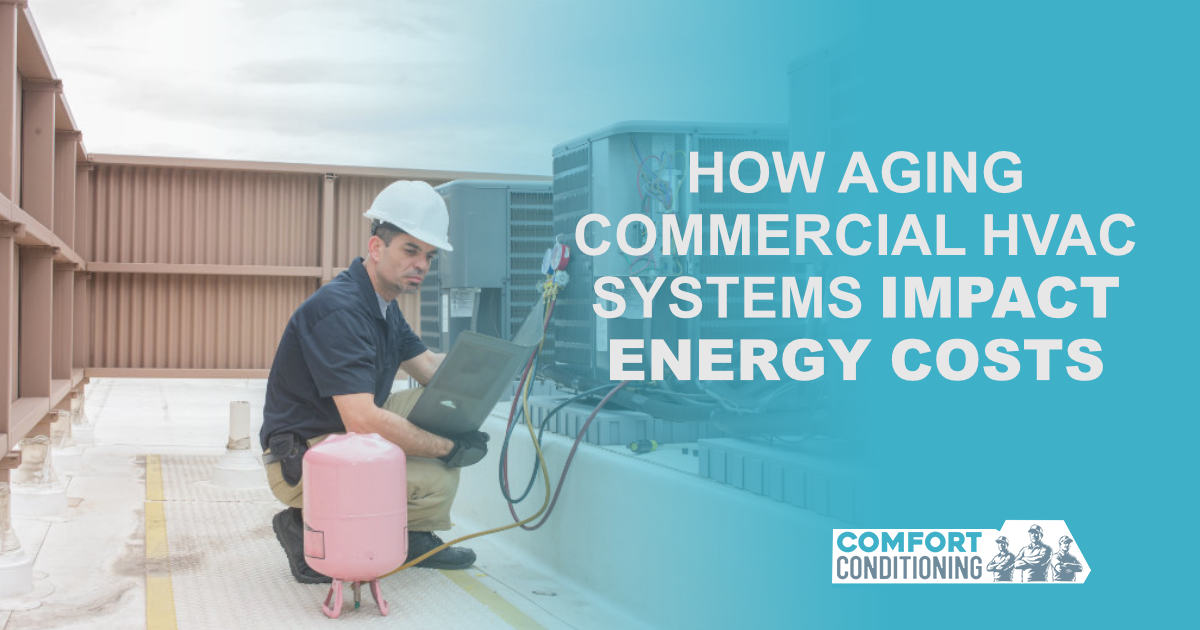
For commercial property owners and facility managers across Krum, Denton County, and North Texas, HVAC systems are more than mechanical equipment—they’re the backbone of daily operations. When commercial HVAC systems age beyond their intended service life, the effects quietly compound: higher energy bills, uneven comfort, unreliable performance, and growing operational disruptions.
Understanding how aging systems affect energy efficiency and building performance helps business leaders plan proactively—rather than reacting to emergencies that disrupt tenants, employees, and customers.
The Hidden Cost of Aging Commercial HVAC Systems
Commercial HVAC systems are designed to last, but not indefinitely. As systems age, their ability to operate efficiently declines—even if they’re still technically “working.”
Rising Energy Consumption
One of the earliest warning signs is increasing utility costs. Older systems:
- Require more energy to maintain set temperatures.
- Lose efficiency due to worn components, refrigerant issues, and outdated technology.
- Struggle to meet modern energy-efficiency standards.
As energy prices fluctuate, inefficient HVAC equipment amplifies operating expenses year after year.
Reduced Performance During Seasonal Shifts
North Texas weather swings place a serious strain on aging equipment. Older systems often struggle to:
- Keep up during extreme summer heat or sudden cold snaps.
- Transition efficiently between heating and cooling seasons
- Maintain consistent airflow across large or multi-zone buildings.
This results in hot and cold spots, tenant complaints, and reduced productivity.
Operational Disruptions Caused by Outdated HVAC Equipment
Frequent Repairs and Downtime
As commercial HVAC systems near the end of their usable life, service calls become more frequent and less predictable. Emergency repairs don’t just increase maintenance budgets—they disrupt operations, scheduling, and tenant satisfaction.
What starts as a minor issue often escalates into system-wide failures that:
- Interrupt business hours
- Impact employee comfort and customer experience
- Create unplanned capital expenses.
Inconsistent Indoor Comfort
Temperature instability is a common issue with aging systems. In commercial spaces, this can mean:
- Uneven comfort across offices, retail areas, or production spaces
- Increased strain on equipment as thermostats compensate
- Reduced indoor air quality due to outdated filtration and airflow control
Comfort issues aren’t just inconvenient—they affect productivity, retention, and brand perception.
Warning Signs: It May Be Time for HVAC Replacement
While every building is different, there are consistent indicators that HVAC replacement should be part of strategic planning:
- Noticeable increases in energy bills without usage changes
- Frequent service calls or recurring mechanical issues
- Difficulty maintaining consistent temperatures
- Equipment that is 15–20+ years old
- Systems built on outdated technology or refrigerants
Addressing these signs early allows business owners to make informed decisions rather than emergency replacements under pressure.
HVAC Installation as a Strategic Investment—not a Reactive Expense
Too often, commercial HVAC replacement happens only after a major failure. A proactive commercial HVAC installation approach delivers long-term value by improving:
- Energy efficiency, reducing monthly operating costs
- System reliability, minimizing downtime, and emergencies
- Comfort, consistency, supporting tenant and employee satisfaction
- Future scalability, allowing systems to support business growth
Modern commercial HVAC systems are engineered for performance, efficiency, and smarter controls—providing measurable ROI when properly evaluated and installed.
Why Professional Evaluation Matters Before Replacement
Not every aging system requires immediate replacement—but every system benefits from expert evaluation. A qualified HVAC partner can assess:
- Equipment condition and remaining lifespan
- Energy efficiency losses
- Load requirements based on building usage
- Opportunities for system upgrades or phased replacement
This data-driven approach ensures HVAC replacement decisions align with operational goals and budget planning.
Trusted Commercial HVAC Installation in North Texas
Comfort Conditioning works with commercial property owners and facility managers throughout Krum, Denton County, and surrounding North Texas areas to evaluate, plan, and install high-performing commercial HVAC systems built for long-term reliability.
As a technician-led, integrity-driven company, Comfort Conditioning approaches HVAC installation with craftsmanship, transparency, and respect for the businesses they serve—ensuring systems are designed and installed to perform when it matters most.
📞 Call 469-277-7886 today to schedule a consultation or request a customized installation quote.